
Methuen City Directory Collections
Methuen directory research has two reliable starting points. The Nevins Memorial Library Historic Collection says its Reference Department holds many city directories along with microfilm, vital-record books, and yearbooks. The Massachusetts State Library publishes the clearest verified Methuen year plan. Neither source establishes a complete run of every issued directory, a publisher list, or a complete online collection. A directory result should therefore be recorded as a dated listing, then compared with a deed, census, obituary, or other record that answers the separate question at hand.
| Collection | Years represented | Where to consult | Access and limitation |
|---|---|---|---|
| Methuen directory run | 1860-61 through 1983, selected years | Massachusetts State Library | Published holdings list; the public row does not name publishers. |
| Nevins city directories | Many directories, exact run not published | Nevins Reference Department | Ask staff and check the MVLC catalog before visiting. |
| Local newspaper files | Early 1800s forward in microfilm; Eagle Tribune 1890-present | Nevins Reference | Microfilm and digital searching can supply dated context. |
| School yearbooks | Methuen High School, 1928-present | Nevins digital collections | Useful for school-era clues, not a substitute for a directory. |
The State Library list is a holdings map, not evidence that every date between two listed volumes was printed or available online. Nevins can be the practical fallback when a name, street, or year needs a physical reference check.
Nevins and Methuen Directory Access
Nevins Memorial Library at 305 Broadway is the local reference stop for a Methuen city directory question. Its Reference Department identifies microfilm, city directories, Massachusetts vital records, and local scans among its historic resources. The library’s newspaper reels reach back to the early 1800s. Named titles include the Methuen Weekly News, Methuen Transcript, and Lawrence Eagle Tribune, with Eagle Tribune coverage from 1890 to the present. Reference staff can help with the reader, and the published copying price is 15 cents per page.
Use a focused request such as a surname, street, and year range. The public Historic Collection page does not publish a full shelf list, a reverse-directory inventory, or a confirmed criss-cross run. That is a real access gap, not permission to assume an address section exists in a particular volume.
Nevins’s Historic Collection page introduces the local materials and access route.
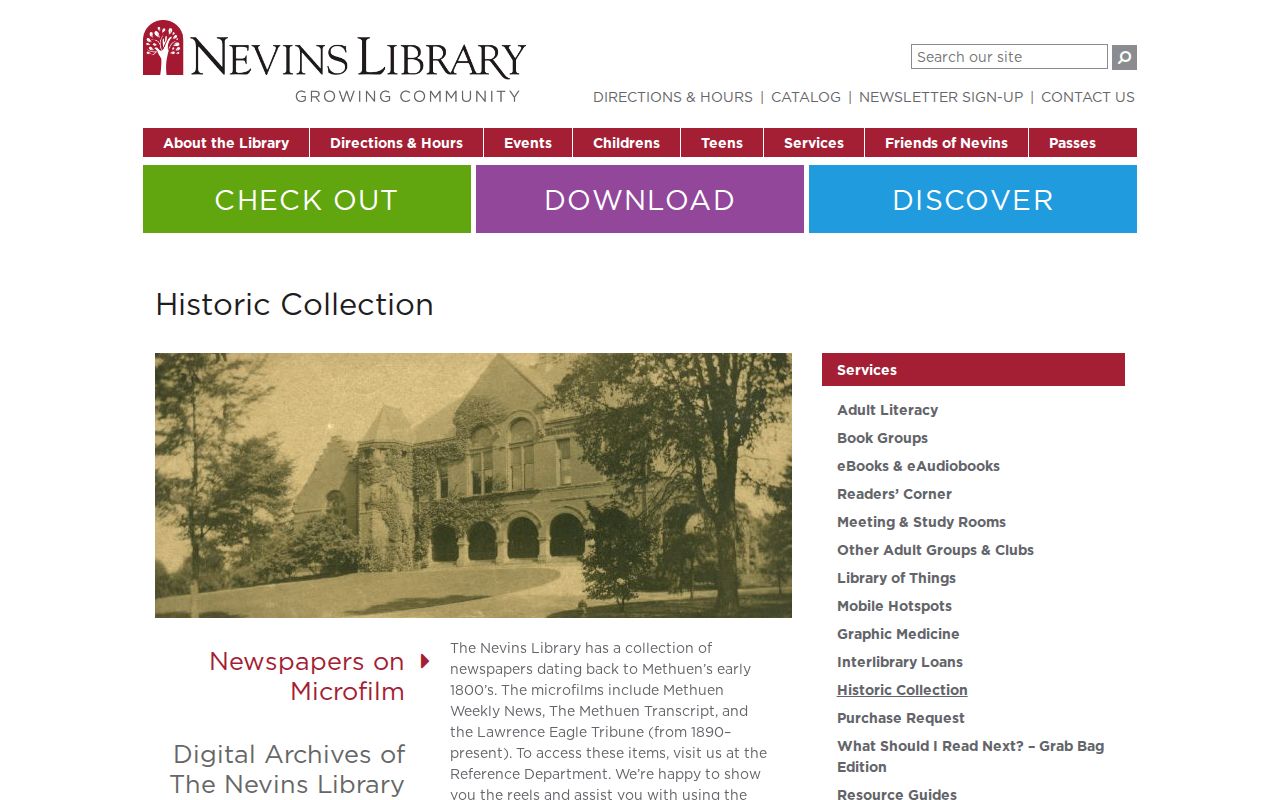
That collection is the best local handoff when a State Library year needs a closer shelf, microfilm, or catalog check.
Note: A missing online catalog result does not establish that Nevins lacks the item, because much of the local collection requires reference confirmation.
Exact Methuen City Directory Years
The State Library’s published holdings list gives the verified Methuen directory sequence: 1860-61, 1885-86, 1892, 1896-97, 1901-02, 1904-05, 1909, 1911, 1913, 1915, 1917, 1919, 1921, 1923, 1926, 1930, 1932*, 1934*, 1936*, 1938*, 1940*, 1942*, 1944*, 1946*, 1948*, 1950*, 1952*, 1954*, 1956, 1962, 1966, 1968, 1976, 1980, and 1983. The asterisks are preserved here exactly as listed. Their meaning belongs to the PDF introduction and should not be guessed from the year row alone.
Begin with the two dates bracketing a known event. That makes an address change easier to test without treating the gaps as proof of a move. The list does not identify a publisher in the Methuen row, so the volume itself or a library catalog must supply that detail.
Digital Clues for Methuen City Directories
Directories work better beside local digital material. Nevins lists Methuen Life from 2001 to the present, the Methuen Transcript, Methuen Falls Gazette, Methuen News, and other scans. Its digital partnerships also point to FamilySearch’s Methuen vital-record catalog, which describes a 1909 Topsfield Historical Society publication covering records through the end of 1849. That 345-page book has alphabetical manuscript-record indexes supplemented by church registers and cemetery inscriptions. It is a historical research lead, not a current certificate.
The catalog record documents the historical book and its repository conditions.
A name found in an older city directory can be checked against this book’s date range, then against the appropriate custodian for an official record.
Methuen High School yearbooks from 1928 forward add a different kind of dated clue. Newspapers need patient reading too, since OCR can miss names, streets, and initials.
Reading a Methuen City Directory Entry
No official browser pass produced an inspected page from a Methuen directory. The items below are a cautious inventory of fields that may appear in a historical directory, not a transcription or a promise that every Methuen volume uses the same marks. Photograph or note the volume’s own abbreviation page before expanding shorthand. A surname and initial are often the useful search starting point, but the street and date keep the result from being confused with another person of the same name.
| Name heading | Surname, given name or initials, and sometimes a title. Try full and abbreviated forms. |
|---|---|
| Household clue | A spouse in parentheses, a widow notation, or a family reference may appear and needs separate verification. |
| Occupation field | A trade, work, or organization clue may help distinguish same-name entries in that period. |
| Address | House number and street, sometimes with a boarding or apartment indication. |
| Tenure notation | Some directories use marks such as householder or roomer, but the Methuen key has not been inspected. |
- Criss-cross directory
- A street-order section that may arrange listings by address rather than surname. An exact Methuen run has not been verified.
- Householder index
- An index organized around a household or address. Its presence and scope depend on the individual volume.
- Abbreviation key
- The volume’s own explanation of its marks. Read it before interpreting a widow, residence, or tenure notation.
Trace Methuen City Directory Households
A household trail starts with one dated fact, not a broad list of names. An obituary, deed, yearbook, vital index, or town record can establish the first date. Search the nearest listed directory year, write down the street exactly as printed, and then compare the next available year. The State Library sequence is intermittent, so a person who vanishes between two holdings may have moved, died, changed the form of a name, or simply fallen in an unrepresented year.
- Choose a documented name and date, then find the nearest verified Methuen directory year.
- Record the name form, street wording, household notation, and any occupation clue without expanding unverified abbreviations.
- Check the next available listed year and note only observed changes in spelling, address, or household details.
- Pair the dated directory entries with the released 1910, 1920, 1930, 1940, or 1950 federal census for household composition at each census date.
- Use a deed, newspaper notice, probate file, or vital record to test a move, death, or ownership change.
The 1890 federal population schedule was destroyed in a fire. Directories, tax lists, vital records, newspapers, and available special schedules can help bridge that specific hole, but none should be presented as a complete substitute.
Note: A directory listing can place a name at an address for its publication period, but it does not establish present residence or ownership.
Methuen Directory Research Across Custodians
Methuen’s records shift between local, county, and state keepers. The city’s transcribed town records cover 1726-1917. Northern Essex land records begin with the district in September 1869, while older Essex deed research moves to Salem and archival holdings. That split matters when a city-directory address is being paired with a property trail. A later book and page at the Lawrence Registry cannot by itself fill the earlier Salem record gap.
| 1726-1917 | Methuen town records are available as transcribed city PDFs. |
|---|---|
| September 1869 | Northern Essex begins its Methuen land-record district; earlier deeds follow the Salem bridge. |
| 1928-present | Methuen High School yearbooks are listed in the local digital collection. |
| 2001-present | Methuen Life is listed among the local digital newspaper resources. |
For statewide context, the Massachusetts Archives family-history guidance points toward census, naturalization, probate, and local-record routes.
The Archives route can confirm the right record category when the directory provides only a name, date, or place clue.
Methuen City Directories and Local Memory
Historic Methuen is a local-history contact point rather than a published city-directory database. Its Tenney Gate House museum at 37 Pleasant Street focuses on early Methuen, Whittier, Tenney, Searles, Nevins, industrial, and farming history. The public information gives contact routes but not a complete archival catalog, so a question about a person, property, or collection should be framed narrowly and confirmed with the organization.
The Historic Methuen public collection route provides the local context for that kind of question.
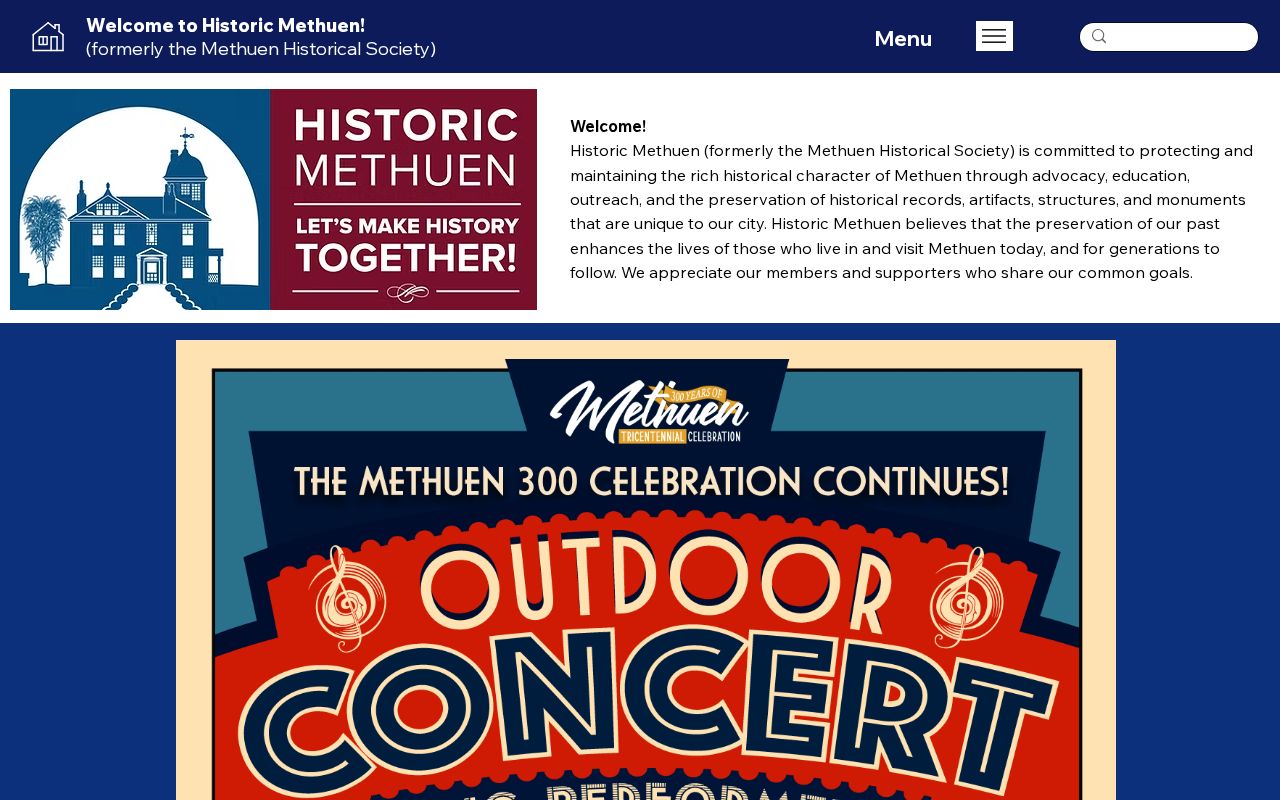
A directory address gains value when it can be read with a newspaper, town record, or museum collection that reflects the same period.
When a Methuen Directory Is Silent
Three gaps should remain visible in a Methuen city directory search: Nevins has not published a complete shelf inventory, no official online reverse-directory run was located, and the State Library’s asterisk notation must be read in the source introduction. Ask Nevins Reference for the precise street and year, then retain the response with the query date. For a property question that crosses before September 1869, use the Salem deed route instead of forcing a Lawrence result backward.
A city directory can be a strong historical lead. It is still an index-like listing, not a certified vital record, a deed image, or proof that a person remained at the address after the volume’s period. Those distinctions make a family-history result reproducible and fair to the people named in older records.