
Methuen Previous Residents by Era
A backward address trail uses sources with different dates and different meanings. Northern Essex instruments identify legal parties to land. Directories can place a listed household at an address for a particular publication period. Census records describe a household on an enumeration date. Taken together, those sources are more useful than any one result, especially when a parcel was divided, a name was shortened, or a street number changed. The table keeps the source boundaries clear before a search begins.
| Source | Years it covers | Where held | What it shows |
|---|---|---|---|
| Northern Essex deeds | September 1869 to present | Lawrence Registry, online and counter | Grantor, grantee, legal land chain, images, and prior references. |
| Older Essex deeds | Before September 1869 | Southern Essex in Salem and archival material | Older book and leaf references outside the Northern district. |
| Grantor and grantee books | 1869-1955 explicitly described | Northern Essex Registry | Alphabetical bridge when a deed lacks a prior book and page. |
| Methuen city directories | Selected State Library years, 1860-1983 | State Library and Nevins Reference | Names, streets, and household clues, with intermittent coverage. |
| Federal census | 1790 onward, subject to release | NARA, FamilySearch, and libraries | Household composition at the date of enumeration. |
A property may have earlier occupants than its current structure, and a person listed in a directory may not be a legal owner. Keep those separate from the start.
Start a Methuen Previous Residents Trail
Begin with the current Methuen parcel record at Patriot Properties. Record the exact situs address, parcel ID, displayed owner, sale date, book and page, legal-description clue, plan reference, and the fiscal-year label. The site’s data are an assessment snapshot, not a statement of who occupies the address. An owner mailing or C/O line can be outside Methuen or belong to an estate, trust, company, or representative.
The parcel ID and book/page are better bridges than a bare street string. They help when an older record uses a road description, a plan lot, or a spelling that no longer matches the current address. Preserve the search date too, because assessment data can change after the fiscal snapshot.
Methuen Previous Residents and Deed Chains
Use the current book and page at the Northern Essex Registry search to open the deed image, not merely the index result. Capture the grantor, grantee, parties, deed date, recording date, consideration, legal description, plan or lot, and prior reference. Then search the prior reference. The present seller is normally the earlier buyer in the next deed back, which creates the legal chain of title.
- Open the current deed by book and page, then read the image for the prior reference and legal description.
- Search that earlier book and page before relying on a name search, which can introduce same-name results.
- When no prior reference appears, use the separate alphabetical grantor and grantee index books with the party name, Methuen, and a narrowed date range.
- Record transfers, plans, and lot changes beside each dated instrument rather than assuming the modern parcel stayed unchanged.
- Move to Southern Essex in Salem when the trail crosses before the September 1869 district boundary.
Grantor books are explicitly described for the 1869-1955 period and can cover a broader span than the grantee books. A mortgage or discharge documents financing activity, not a change of resident. A deed follows land, not the building itself: a parcel may have been split, merged, rebuilt, moved, or transferred with land described as having buildings.
The Northern Essex grantor-grantee search is the direct access point for the land-record part of this process.
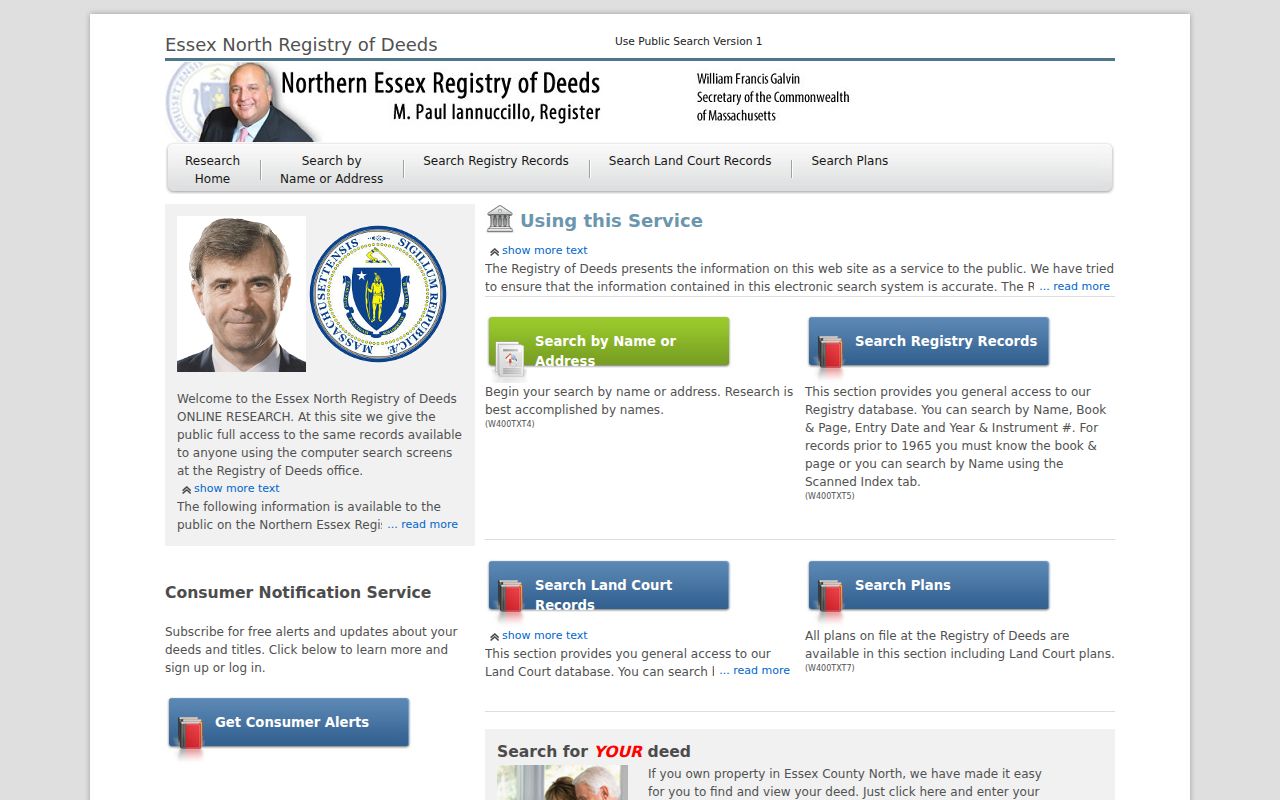
Reading each instrument image keeps a chain based on the recorded land description rather than a loose collection of name hits.
Methuen Previous Residents Deed Terms
Deed language is compact, so the same terms should be used consistently in an address-history note. The people named on an instrument may be spouses, trustees, estate representatives, or entities. Their names establish a legal role in that recorded transaction. They do not by themselves establish every person who lived on the parcel.
- Grantor
- The party conveying an interest in the recorded instrument. In a simple sale, this is the seller.
- Grantee
- The party receiving the recorded interest. In a simple sale, this is the buyer.
- Chain of title
- The ordered sequence of recorded land transfers and prior references for the same legal parcel or lot.
- Legal description
- The deed or plan wording that identifies land by lot, bounds, plan, or prior reference, rather than only by today’s street number.
Note: A legal party or mailing address can be a useful lead, but it should not be labeled as proof of occupancy without a dated household source.
Methuen Previous Residents Before 1869
Methuen is in Essex County, but the relevant modern land-record district is Northern Essex in Lawrence. Its coverage begins in September 1869. A deed chain that reaches earlier must bridge to older Essex County material through the Southern Essex Registry in Salem and Massachusetts archival resources. This jurisdiction change is the central historical boundary for a long Methuen address trail.
Massachusetts General Laws, chapter 36, section 1 identifies Methuen in the Northern District. The statute is the source for the district split, not evidence that all older books are digitized or searchable in the same way.
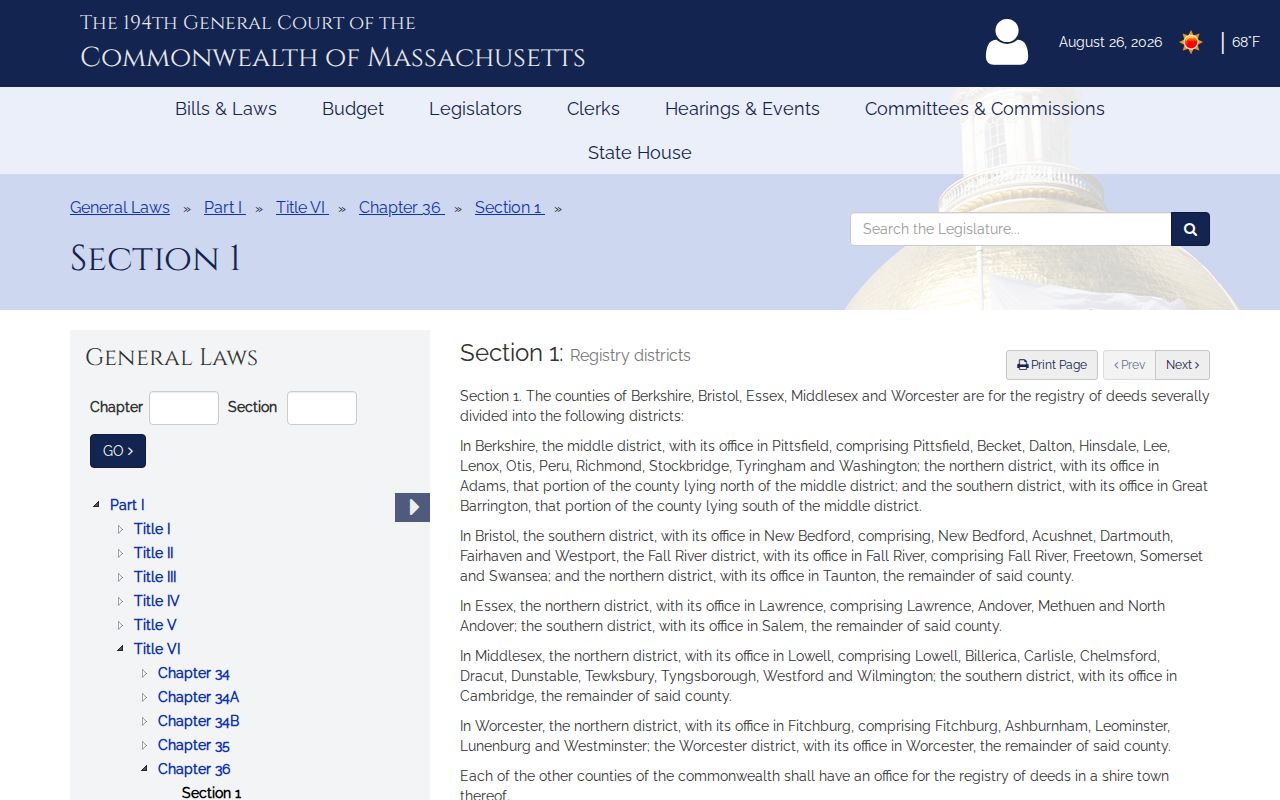
The Lawrence-to-Salem handoff should be recorded as part of the trail, so an older absence is not mistaken for a missing property history.
Methuen Previous Residents in Directories
Land records identify legal relationships; directories and census records supply the household layer. The State Library’s Methuen directories are selected years from 1860-61 through 1983, and Nevins says it holds many directories without publishing a full shelf list. For the collection details and exact year inventory, use the Methuen city directories. A request to Nevins should name the street and year because no official online reverse-directory run or complete shelf inventory was located.
Pair a directory year with the nearest released 1910, 1920, 1930, 1940, or 1950 federal census. Census material describes a household at its enumeration date; a directory may have a different publication cycle. The 1890 population schedule was destroyed, so use dated directories, vital records, tax material, newspapers, and available special schedules as separate substitutes rather than claiming a reconstructed census.
Nevins’s early-1800s microfilm and its named local newspaper runs may confirm a move, death, property sale, or public community event. An obituary or probate record can link an estate to heirs, while still needing careful date and name matching.
Keep the record types in sequence. A directory can give a surname and street; a census can identify the household at a later or earlier date; a deed can identify a legal transaction; and a newspaper can report an event that helps explain the change. None has the same date or purpose. For instance, a person may disappear from a directory because a selected year is absent, a name was abbreviated, the person moved, or the compiler did not list that household. The research note should say which explanation is supported, rather than filling the gap with a conclusion.
For very early family context, Nevins and FamilySearch point to the 1909 historical vital-record book that reaches through 1849, with church-register and cemetery-inscription supplements. The City’s transcribed town records span 1726-1917 and can add civic names or actions, but they are not a household roll. Each source can strengthen a timeline when its coverage is stated beside the finding.
Regional Method for Methuen Address History
No Methuen-specific public house-history guide was located. The Massachusetts Historical Commission preservation research guidance is a regional method, not a Methuen guide. It is useful because it explains the same Northern Essex mechanics: begin with the assessor’s book and page, follow the deed image, use plot plans and parcel identifiers, consult grantor or grantee books when needed, and cross the 1869 boundary to Salem.
The regional guidance describes a technique that needs Methuen-specific confirmation at each step. It does not supply a local street-renumbering schedule, a former-resident list, or a complete city collection.
The regional house-history research resource illustrates that method.
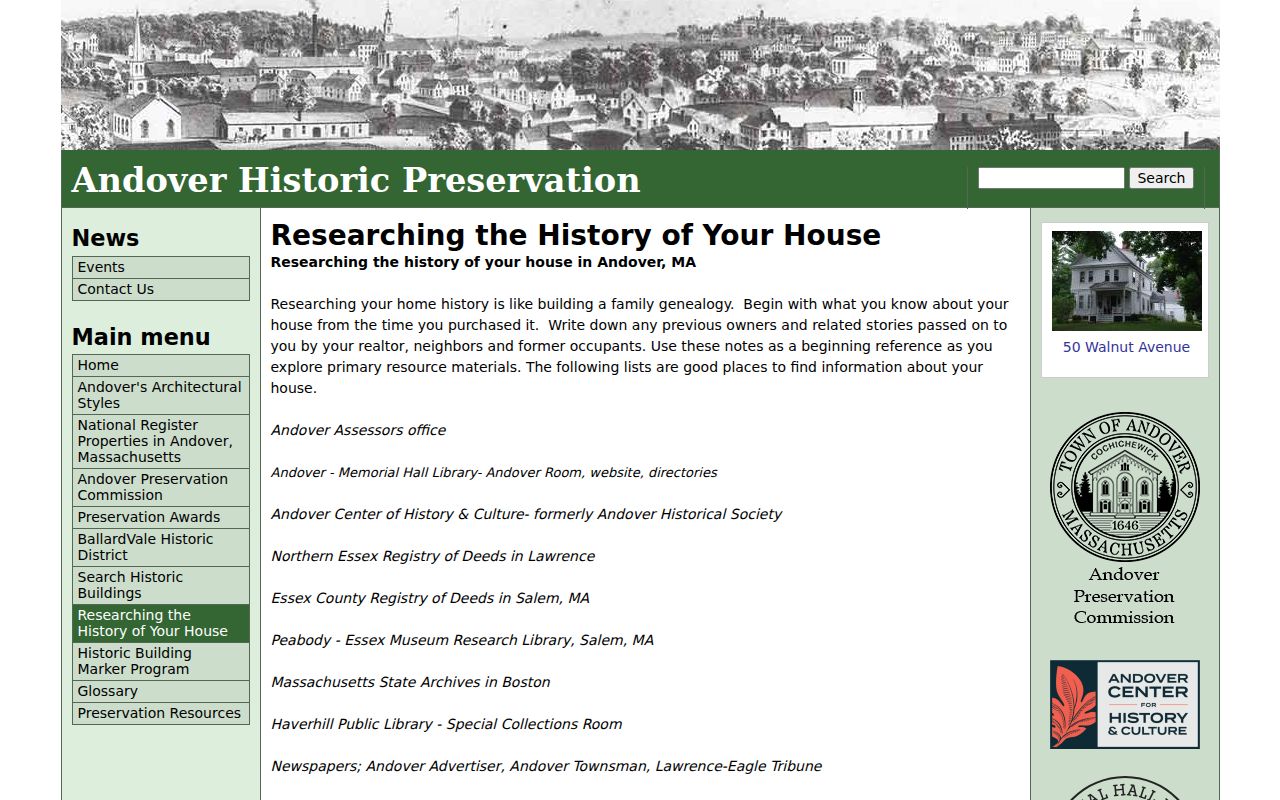
Use the method to organize a request, then cite the actual Methuen, Lawrence, or Salem record that answers the question.
Methuen Previous Residents and Sanborn Maps
Sanborn maps can add building and street context to an address trail. The Library of Congress explains that a search result can carry a state, city, edition date, sheet count, notes, and digital files. A map may show street names and numbers, footprints, building use, materials, hydrants, and block outlines. It does not identify a resident. Exact Methuen Sanborn editions were not located in the official research pass, so do not assign a coverage year until the catalog or a reference librarian confirms one.
The Library of Congress Sanborn guide explains the catalog-search approach.
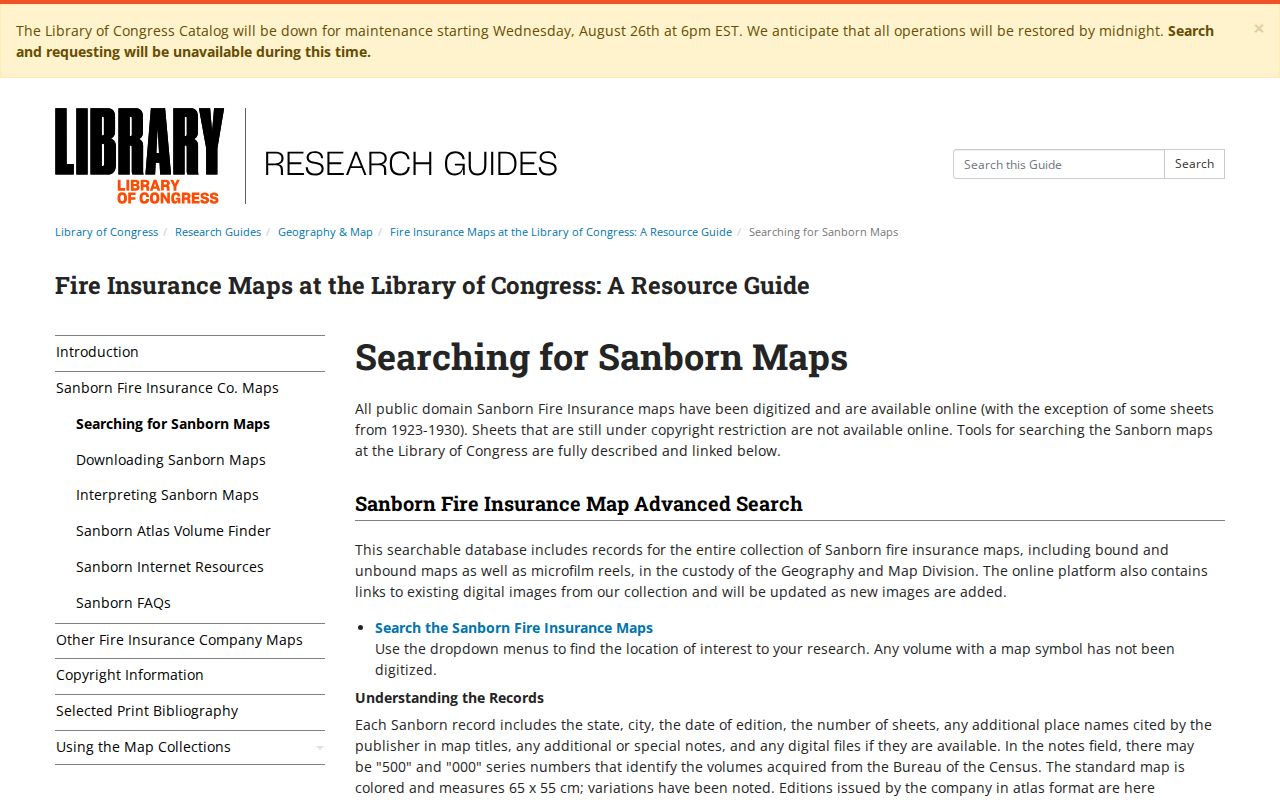
A confirmed map can test the physical setting of an address, but directories and deed images remain the dated sources for people and legal parties.
Methuen Previous Residents Research Limits
An address history should state what each record supports. An assessed owner is not necessarily an occupant. A mailing recipient is not necessarily an owner. A deed party is not necessarily a household member. A directory entry is not a promise that the person stayed after publication. Old street strings can also fail because early records may use town-form wording, rural owner references, or a legal description instead of a modern number.
Use the trail carefully. Methuen previous-residents research is appropriate for family history, estate questions, and property history. Do not use public records to harass, intimidate, or compile unnecessary personal details about anyone.
For a city permit card that is not publicly searchable, Methuen’s research record points to an address and date-range request through the municipal public-record route. The lack of a displayed permit search is not proof that construction, demolition, or a property change never occurred.